 how-to
How Do Med Spas Convert More Patient Inquiries?
Last Updated: October 30, 2026
Quick Summary
Med spa patient conversion improves fastest by running a 10-minute audit of your search visibility and call handling, then fixing the biggest leak first. Answer every call, follow up on each inquiry within one business hour, and give every consultation a clear treatment plan and price.
- Search your main treatment plus near me from your practice and from a few miles away.
- Return every missed call the same day, ideally within one business hour.
- Use a three-touch follow-up sequence and stop after three unreturned touches.
- Assign one owner per inquiry so leads don't fall between channels.
- Reduce no-shows with a booking confirmation, a day-before reminder, and a confirm reply.
Table of Contents
- Start With a 10-Minute Patient Conversion Audit
- Fix the First Leak: Search Visibility and Local SEO
- Answer Every Caller: Mobile and Call Handling Basics
- Med Spa Lead Follow-Up Strategies That Keep Inquiries Warm
- Med Spa Consultation Conversion: Turning the Visit Into a Plan
- Med Spa Consultation Scripts for Common Questions
- Med Spa No-Show Reduction: Protect the Booked Slot
- Get Your Free Google Maps Scan and Start With the Biggest Leak
- Frequently Asked Questions
Start With a 10-Minute Patient Conversion Audit
Most med spas don't lose new clients because of price or treatment quality. They lose them in the first few minutes of med spa patient conversion, before a single consultation happens. The leak is often in search visibility or call handling, and both are measurable. For the broader playbook these fixes fit into, see our med spa lead generation strategies.
What to Check on Your Phone and Your Phone Records
Run these four checks in order. Write down what you find.
- Search from two locations. Search your main treatment plus "near me" from your practice, then from a few miles away. Note whether you appear and where.
- Call your own front desk. Try after closing, then again at a busy midday slot. Hear what a new caller hears.
- Read your Google Business Profile as a stranger. Check hours, photos, phone number, and how recent your latest reviews are.
- Pull your call records. Compare answered calls with total calls. Ask your team how many they think go unanswered each week.
Watch out: most owners guess the missed-call number is low. The phone log usually says otherwise.
| Audit Check | Time | What a Red Flag Looks Like |
|---|---|---|
| "Near me" search | 3 min | You're missing or below the top map results |
| Test call to front desk | 3 min | Voicemail with no callback promise |
| Google Business Profile review | 2 min | Old photos, wrong hours, stale reviews |
| Call record comparison | 2 min | A visible gap between total and answered calls |
Whichever check surprises you most is where to start. For a full walkthrough of the search side, see our guide on how to improve med spa local SEO.
Fix the First Leak: Search Visibility and Local SEO
Search visibility is the first leak because it happens before the patient ever knows your name. When someone searches "medspa near me" or a specific treatment, Google shows a short map list first; if you're not on it, many searchers never scroll further. Your ranking isn't one number, it shifts block by block, so you might rank first near your door and be invisible five miles away, where plenty of new patients live.
Answer Every Caller: Mobile and Call Handling Basics
Answering every call is the second leak, and it's the easier one to fix. A person who just found you and called is at their most likely moment to book. If the call goes to voicemail, most don't leave a message. They call the next practice. Med spas are exposed here for three reasons:
- The front desk is often with a client or in a treatment room.
- Many people research treatments in the evening or on weekends.
- Smaller practices close a day or two a week, and those calls go unanswered.
None of this means your team isn't working hard. It means one person can't be in two places at once, and a missed call is a missed consultation. For how an AI receptionist covers every call, read our guide on why med spas need AI receptionists.
Med Spa Lead Follow-Up Strategies That Keep Inquiries Warm
Lead follow-up is where warm interest can cool quickly. A new inquiry is a person mid-decision, and slow replies read as disinterest. Many practices believe they respond quickly, and the call log and inbox can show a different picture. The fix isn't more effort, it's a repeatable sequence with a named owner and a way to measure it.
Set a Response Standard You Can Actually Measure
Pick a target for each channel and write it down where your team can see it. A common pattern among well-run practices:
- Phone: answered live during business hours; every missed call returned the same day, ideally within one business hour.
- Web form and chat: first reply within one business hour during open hours, and by the next morning for after-hours submissions.
- Text: acknowledged within minutes during open hours, since text is now the default channel for many patients under 45.
You don't need software to start measuring. Export your call log and form submissions for one week, timestamp the first outbound reply to each, and calculate the median. The result is often longer than owners assume. That number is your baseline.
Build a Three-Touch Sequence, Not a Single Call
One call and a voicemail is not follow-up. A practical sequence that respects the patient's time:
- Touch 1, same day, phone plus text. Call once. If no answer, leave a short voicemail and send a text naming the practice, the treatment discussed, and one clear next step.
- Touch 2, next business day, email. Confirm what was discussed, restate two available consultation times, and include a link to book. Keep it under 150 words.
- Touch 3, day three, one gentle call or text. Ask a single question: "Would a different time work better?" Then stop. More than three unreturned touches reads as pressure, not service.
Keep every message short and specific: name the treatment, offer two time slots, and ask one question.
Track the Handoff, Not Just the Lead
A common failure is a lead that falls between channels. A patient calls, gets voicemail, fills out a web form, and texts, and three people each think someone else is handling it. Assign one owner per inquiry and log the channel where the patient first made contact. A shared spreadsheet with columns for date, name, channel, first reply time, and outcome is enough for most practices.
Handle Consent and Patient Data Carefully
Follow-up by text and email carries obligations. Follow-up by text and email carries consent and privacy obligations under federal and state rules. Check current requirements with a qualified advisor before sending marketing messages, and treat health details in messages with care. Practical rules that keep most practices out of trouble:
- Collect consent at the point of inquiry with clear language about how you will contact the patient.
- Keep marketing messages separate from appointment and treatment communications.
- Do not include specific treatment or health details in a standard text or email unless your platform and consent support it.
For a deeper playbook on fixing slow replies, see how to fix slow patient lead follow up.
Med Spa Consultation Conversion: Turning the Visit Into a Plan
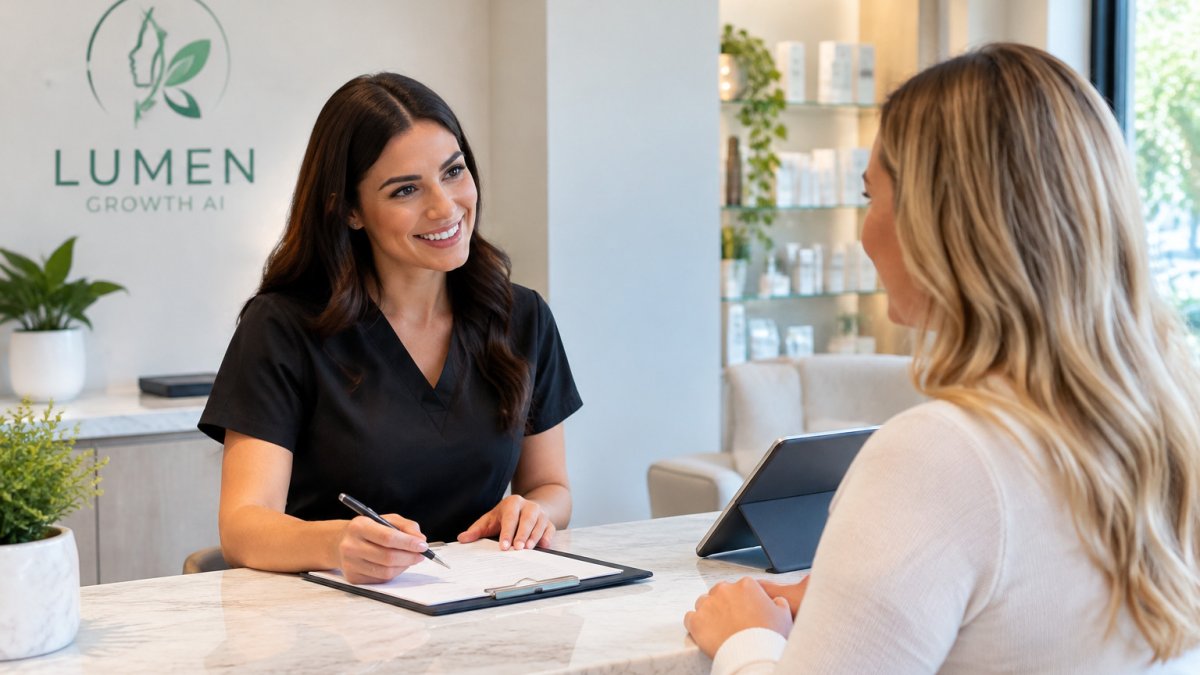
Consultation conversion is the moment the visit becomes a treatment plan. This is where education beats selling. Patients want to understand what a treatment does, what it costs, and what recovery looks like. Clear pricing and honest expectations help build patient trust. A practical structure for the visit:
- Confirm the patient's goal in their own words.
- Explain two or three suitable options in plain language.
- State pricing clearly before they ask.

A patient who leaves without a clear plan rarely comes back. Give them something concrete to decide on.
Med Spa Consultation Scripts for Common Questions
Med spa consultation scripts give your team calm, consistent answers without sounding robotic. The goal isn't a memorized speech but a few reliable responses to the questions every patient asks, delivered to inform rather than pressure. A patient who feels informed is more likely to return, which supports better long-term results.
Answer the Question Behind the Question
Patients rarely ask exactly what they mean. A good script addresses the real concern.
- "How much does it cost?" The real question is often "Can I afford this, and will I feel tricked later?" Answer with the full price for the treatment discussed, what is included, and whether a series or maintenance plan changes the total. Surprise fees at checkout are the fastest way to lose a patient who was ready to book.
- "Does it hurt?" The real question is "What will the next hour feel like?" Describe the first few minutes, the sensation most patients report, and what aftercare looks like. Avoid minimizing; patients remember being told something would be painless when it was not.
- "How long until I see results?" Give a realistic timeline with a range, and say plainly that results vary. Overpromising on timing is the most common source of later dissatisfaction.
Screen for Suitability Before You Sell
A conversion-focused script that skips suitability screening creates refunds, bad reviews, and in rare cases harm. Build these into the consultation flow:
- Medical history and medications. Ask about blood thinners, pregnancy, autoimmune conditions, and prior treatments. Some patients are not candidates for certain treatments, and saying so protects everyone.
- Realistic expectations. Show before-and-after photos of patients with similar skin tone, age, and concern, not the best-case result. Explain what the treatment will not do.
- Informed consent. Walk through risks, alternatives, and aftercare, and document that the patient had the chance to ask questions.
Train for Tone, Not Just Words
Scripts fail when staff recite them. Rehearse the openers, then let your team use their own words. Record a few consultations (with patient consent) and review them together, not to grade, but to notice where patients hesitated or asked the same question twice. New front-desk staff should shadow two consultations before running one alone.
Handle the Price Conversation Without Flinching
Price is the question patients are most afraid to ask and most likely to leave over. Say the number clearly, then stop talking and let the patient respond. If they hesitate, ask what would make the decision easier, a payment plan, a smaller first treatment, or more time.
Staff training on these scripts raises booking rates because patients get the same clear, honest answers every time.
Med Spa No-Show Reduction: Protect the Booked Slot
No-show reduction protects the slot you already sold. A booked consultation that never happens costs the same as a missed call. Our med spa no-show reduction tactics are simple:
- Send a confirmation right after booking.
- Send one reminder the day before.
- Ask for a quick reply to confirm.
These small steps cut empty slots without adding staff. For tactics that also cover after-hours gaps, see how to capture after hours med spa leads.
Get Your Free Google Maps Scan and Start With the Biggest Leak
You now have the full picture: find the leak, fix visibility, answer every call, follow up fast, and protect the booked slot. The challenge is doing all of it at once. That's what Lumen Growth AI is built for. Our Local SEO work improves how often you appear in the searches that matter, and we re-scan after 30 days so you can see what changed.
Frequently Asked Questions
How quickly should a med spa follow up with a new lead?
Follow up as soon as the inquiry arrives, ideally within minutes by phone and within the hour by text or email. A person who just called or submitted a form is at their most likely moment to book. If the call goes to voicemail, most people do not leave a message; they call the next practice on the list. Set a rule that every new inquiry gets a reply before the end of the business day, and use automated follow-up for evenings and weekends so no lead waits until Monday.
What should a med spa include in its consultation process?
A strong consultation covers four things: the patient's goal, the treatment options that fit it, clear pricing and what the visit involves, and a simple next step. Ask what result they want and what has stopped them before. Explain the plan in plain language, show before-and-after examples where appropriate, and give a written summary. End with a specific booking option rather than an open-ended invitation to call later. This structure supports med spa consultation conversion without pressure.
How can med spas reduce cancellations and no-shows?
Med spa no-show reduction comes from confirmation and reminders, not penalties. Send a confirmation at booking, a reminder 24 to 48 hours before, and a short text on the day. Ask patients to confirm by reply so you know the slot is secure. Keep a waitlist for peak demand so a cancellation can be filled quickly. Track no-shows by day and time; patterns often point to scheduling problems you can fix, such as slots that are too far from when the patient booked.
How do med spas measure patient conversion rates?
Track the funnel in stages: inquiries, booked consultations, consultations attended, and treatments booked. Divide each stage by the one before it to get a conversion rate. Compare by channel so you know whether calls, forms, or social messages convert best. Also measure response time, since slow replies lower med spa patient conversion. A simple spreadsheet updated weekly is enough to start. Review the numbers monthly and change one step at a time so you can see what moved the rate.
Your biggest leak is already happening, whether you've measured it or not. Get started with Lumen Growth AI and see exactly where you rank within 5 and 10 miles, then watch every call get answered. Request your free Google Maps scan and know what to fix first.